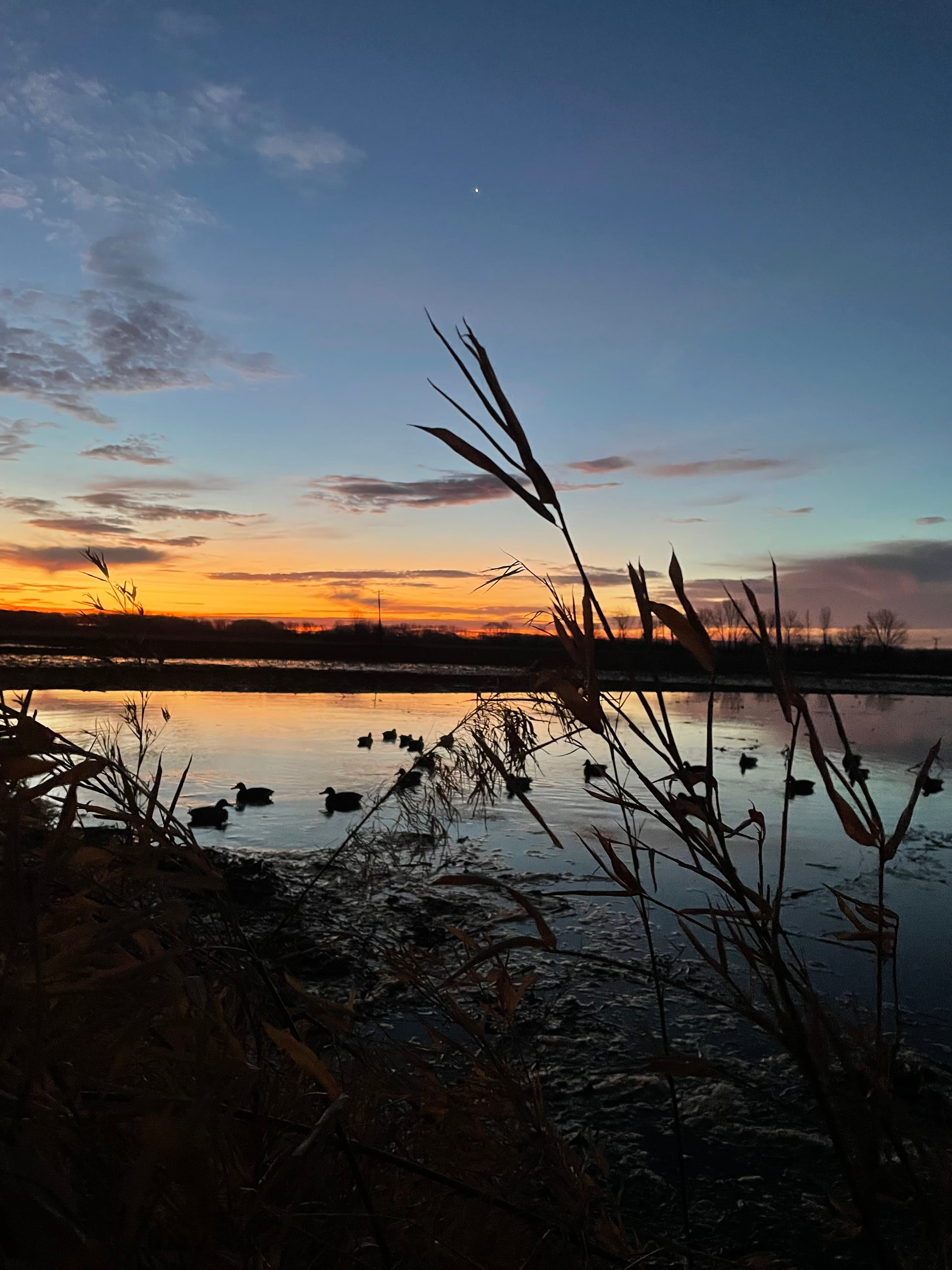
For generations, Hovey Lake Fish and Wildlife Area in Posey County, Indiana stood as one of the premier duck hunting destinations in the Midwest. Positioned in the floodplain of the lower Wabash River near its confluence with the Ohio, it offered nearly perfect habitat for migrating waterfowl. Through the mid-20th century, hunters regularly saw limits of mallards, pintails, and teal. Stories from the 1950s through the 1980s describe skies full of birds and consistent success that rivaled more famous destinations along the Mississippi Flyway.
I started hunting the region in 2020 and heard both the tall tales from the decades prior and the reasons why those hunts are stuck in the past. Many lifelong hunters, like those I hunt with in southwestern Indiana describe a very similar reality. There are fewer birds, shorter migrations, and less predictable seasons. While it may feel like a simple decline, the science tells a more complex story. A combination of climate change, agricultural shifts, habitat loss, and behavioral adaptation has reshaped how and where ducks migrate across North America and southwestern Indiana.
Migration Is Shifting Within the Flyway
The idea that migration paths are shifting is partially true, but often misunderstood. Flyways like the Mississippi are not narrow corridors but broad regions. Within those regions, ducks adjust their movements based on weather, habitat, and food availability.
Research from the U.S. Fish and Wildlife Service and Ducks Unlimited shows that while the Mississippi Flyway remains intact, the distribution of birds within it has shifted northward and westward in recent decades. A key concept is “short-stopping.” Instead of continuing to traditional wintering grounds like southern Indiana, Kentucky, and Arkansas, many ducks now stop earlier in Illinois, Missouri, and even farther north.
This shift reduces both the number of birds reaching southwestern Indiana and the amount of time they remain there.
Climate Change and the Short-Stopping Effect
The most significant driver behind this change is climate.
Historically, freezing temperatures forced ducks south as wetlands iced over and food became inaccessible. Today, winters across the Midwest are warmer, with fewer and shorter freeze events. Data from the National Oceanic and Atmospheric Administration shows a clear warming trend over the past several decades.
As a result, wetlands and agricultural fields in states north of Indiana remain open longer into winter. A study published in Global Change Biology found that mallards have shifted their wintering range north by hundreds of miles, strongly correlated with rising temperatures. If open water and food are available, ducks simply do not need to migrate as far.
For areas like Hovey Lake, this means fewer birds arriving, later arrivals in the season, and shorter periods of peak activity.
Food Availability Has Moved North
Food is just as important as weather in determining migration patterns. Modern agriculture in the Midwest has created an abundance of reliable food sources farther north. Waste corn and soybeans left after harvest, combined with managed wetlands and conservation programs, provide high-energy feeding opportunities for migrating ducks.
Organizations like Ducks Unlimited have worked extensively with farmers in states like Illinois and Iowa to improve habitat. These efforts have made northern portions of the flyway increasingly attractive to waterfowl.
At the same time, the lower Wabash Valley has experienced changes in flooding patterns and wetland productivity. River management, sedimentation, and inconsistent water levels have reduced the reliability of natural food sources in some areas.
When ducks encounter abundant food earlier in their migration, there is little incentive to continue south.
Habitat Loss and Degradation
Local habitat conditions also play a significant role. Indiana has lost more than 85 percent of its original wetlands since European settlement, according to the Indiana Department of Natural Resources. While protected areas like Hovey Lake remain intact, the surrounding landscape has been heavily altered.
Wetlands have become more fragmented, reducing the size and connectivity of available habitat. Changes in river systems have altered natural flooding cycles that once supported productive feeding areas.
Even in managed areas, maintaining ideal conditions has become more difficult. Water levels, vegetation, and food availability must align, and increasing variability in weather patterns makes that harder to achieve consistently.
Hunting Pressure and Behavioral Adaptation
Another factor contributing to the perception of fewer birds is how ducks have adapted to hunting pressure.
Modern waterfowl have become more cautious in response to decades of hunting across the flyway. They are more likely to feed at night, limit daytime movement, and avoid heavily pressured areas. Research from the U.S. Fish and Wildlife Service shows that ducks quickly learn to use refuges and areas with less disturbance.
If regions farther north offer both abundant food and reduced pressure, ducks will increasingly remain there. This behavioral shift can make it seem like populations have declined locally, even when overall numbers remain stable.
Population Trends and Distribution
It is important to distinguish between fewer ducks overall and fewer ducks in a specific location. According to U.S. Fish and Wildlife Service surveys, many duck populations have remained stable over the long term. In some years, populations have even increased.
The issue facing hunters in southwestern Indiana is not necessarily a widespread population decline, but a redistribution of birds across the landscape. Some species, such as northern pintails, have experienced declines due to breeding habitat loss in the Prairie Pothole Region. However, for many commonly hunted species, the birds are still present within the flyway.
They are simply spending more time farther north.
A New Reality for Southwest Indiana
The conditions that once made Hovey Lake legendary have changed. Ducks are migrating later, stopping earlier, and spending less time in southern portions of the flyway. Food and habitat conditions are often better farther north, and birds have adapted to both environmental changes and hunting pressure.
The result is fewer birds, shorter windows of opportunity, and less predictability for hunters in the lower Wabash Valley.
Conclusion
Hovey Lake’s reputation was built during a time when climate, habitat, and migration patterns aligned perfectly for southwestern Indiana. That alignment no longer exists in the same way. What hunters are experiencing today is not simply a decline, but a shift in distribution driven by warming temperatures, agricultural change, and evolving waterfowl behavior.
The birds are still there. They are just not stopping where they used to.